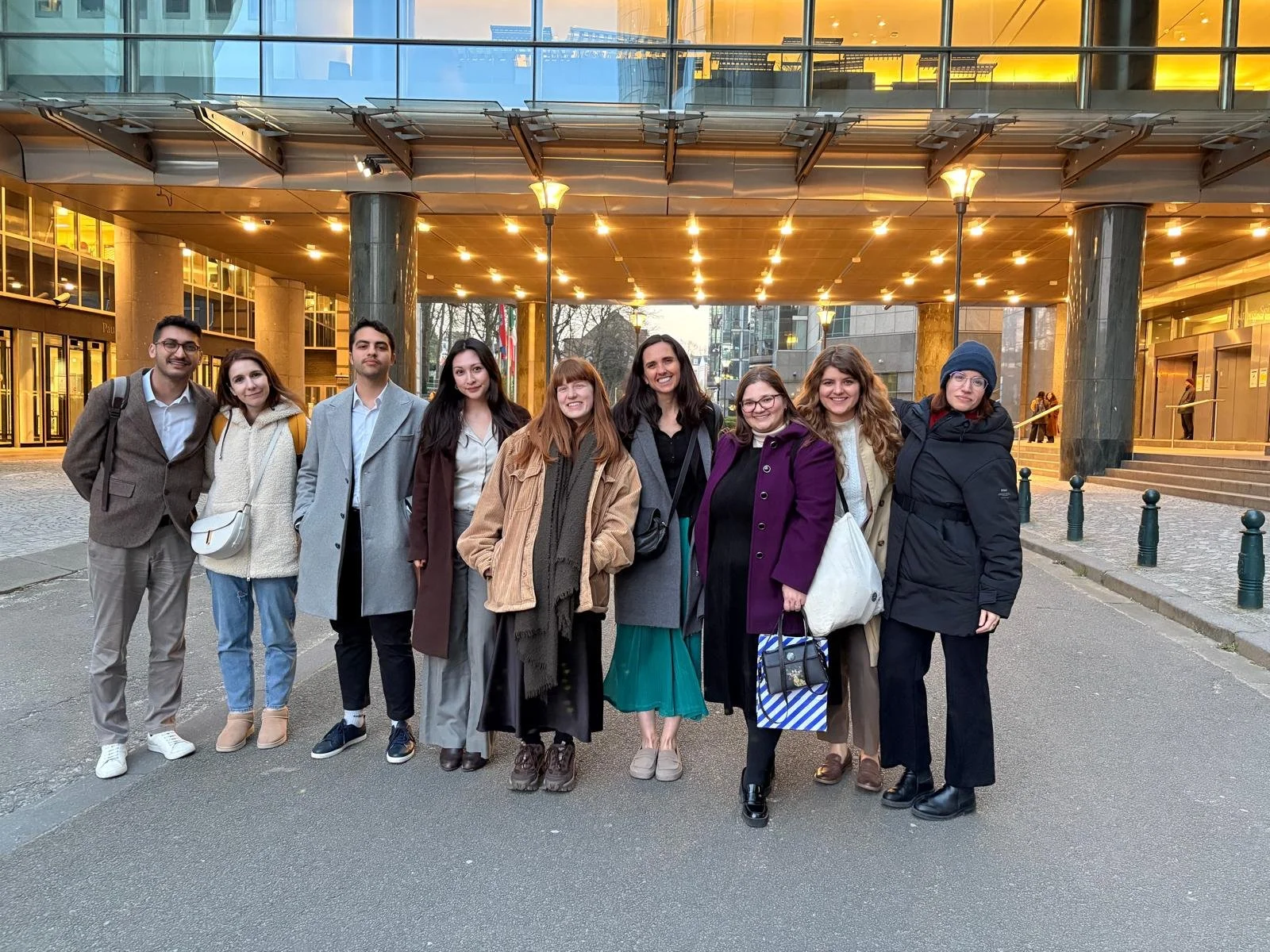
After two and a half years of collaboration, learning, and innovation, YOU-CYCLE: Young Changemakers for a Circular Local Economy, an Erasmus+ KA2 project, concluded with its final conference on March 19th at the European Parliament. Organized by Member of the European Parliament César Luena, the event brought together policymakers, experts, and project partners to reflect on the project’s achievements and explore how youth-led circular economy initiatives can inform and strengthen EU policy discussions on sustainability and youth participation.
The conference created a valuable space for multi-stakeholder exchange, presenting key project results and lessons learned while connecting youth initiatives with broader EU policy frameworks.
At Espacio Geranios, we coordinated YOU-CYCLE and worked alongside partners EKO Greece (Greece), IRCEM (Romania), EIG (Turkey), and YouthProaktiv (Belgium). Throughout the project, our partnership has explored how the social economy and youth-driven social entrepreneurship can foster innovation, strengthen communities, and support young people in shaping more sustainable local economies across Europe.
The final conference featured the presentation of the project’s results, expert panels on the circular economy and policy development, and reflections from project partners.
It was a pleasure to hear from expert panelists discussing how to innovate for circular transitions and ultimately collaborate for a sustainable future. Environmental activists Cass Hebron and Jean-Pierre Antonucci Rexende, alongside Eva Maria Bille from the European Environmental Bureau, shared their thoughts on the skills and support structures needed for youth engagement, and how initiatives can be designed for long-term sustainability rather than short-term engagement. The panel explored how skills development, learning processes, and support structures enable young people to actively contribute to circular economy initiatives, and how youth participation can translate into genuine agency and long-term impact.
Main reflections
Accessible storytelling and learning are key to making circular economy concepts understandable and actionable for young people.
Strong support structures and platforms are needed to enable youth to influence policy, public discourse, and decision-making.
Meaningful participation must go beyond tokenism, ensuring that young people have real agency in shaping circular economy initiatives.
Grassroots action and civil society networks play a crucial role in empowering youth leadership and sustaining long-term engagement.
The policy panel was equally insightful, exploring the transition from vision to policy in enabling youth participation in the circular economy. The panel connected evidence from youth-focused circular economy initiatives (YOU-CYCLE) with EU-level policy frameworks and identified concrete governance and policy changes needed to support meaningful youth participation. Panelists Colm Fahy, Florentina Dumitru, and Nicolas Remilien, professionals in sustainable affairs and advocacy, shared their perspectives and experiences.
Main reflections
Stronger institutional mechanisms are needed to ensure meaningful youth participation in decision-making processes.
EU economic and resilience strategies play an important role in shaping opportunities for young people within the circular economy.
Secure employment pathways and innovation opportunities are essential for enabling youth engagement in circular economy transitions.
Collaboration between EU institutions, industry, and civil society is key to creating inclusive policies and strengthening youth involvement in governance.
The YOU-CYCLE project was rewarding not only for youth entrepreneurs but also for the partners involved. Each partner shared a key learning from the project’s implementation, highlighting how youth-led circular economy initiatives can generate real local impact while also offering concrete recommendations for policymakers and practitioners.
YOU-CYCLE has been a valuable learning experience. We have seen firsthand the impact that non-formal educational programs—tailored to young people’s lives and grounded in their realities—can have, as well as the potential of social entrepreneurship and the circular economy as powerful tools for social inclusion.
Project funded by: Erasmus + Program, through the Spanish National Agency, Instituto de la Juventud de España (INJUVE).
Organized by: EIG – European Integration Group (Türkiye), EKO – Entrepreneurship and Social Economy Group (Greece), IRCEM – Research Institute for Circular Economy and Environment “Ernest Lupan” (Romania), YouthProaktiv (Belgium) and Espacio Geranios (Spain).